Rosh Hashanah prayers open the Jewish New Year with hope, reflection, and a wish for sweetness. This guide shows you what to say, when to say it, and why it matters.
It covers the High Holiday liturgy in synagogue and the Rosh Hashanah blessings at home. About 5.8 million Jews live in the US, so many families, and many guests, ask these questions every fall.
Table of Contents
Rosh Hashanah Prayers and Liturgy Explained
The holiday has its own Rosh Hashanah liturgy, built around three ideas: God as King, remembrance, and a fresh start.
Rosh Hashanah falls on the first two days of Tishrei. It begins the Yamim Noraim, or Days of Awe, a ten-day stretch that ends on Yom Kippur. Tradition pictures the Book of Life open on this day. That is why the mood is both serious and hopeful.
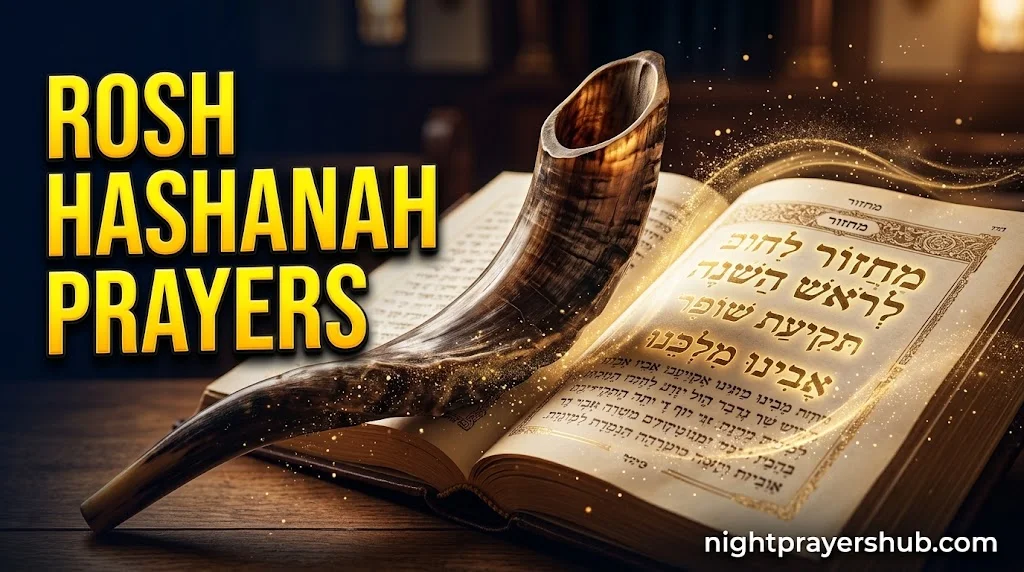
The Torah calls it Yom Teruah, the day of sounding the shofar. Prayers are printed in the machzor, the High Holiday prayer book. Most editions give Hebrew, transliteration, and English side by side.
Practice differs by community. Orthodox, Conservative, Reform, and Sephardic Jews follow different customs, but the core themes stay the same. Rosh Hashanah 2026 began at sundown on Friday, September 11, and ended at nightfall on Sunday, September 13.
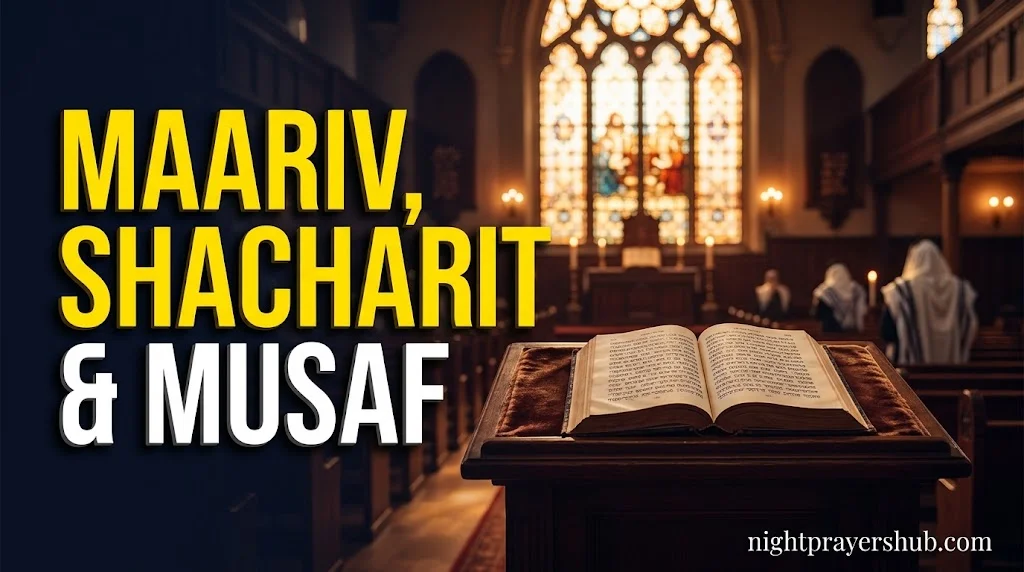
Rosh Hashanah Service Prayers: Maariv, Shacharit and Musaf
Services follow a set order. Knowing it helps first-timers follow along.
Rosh Hashanah is a meaningful time for reflection, repentance, and renewing your relationship with God through prayer. As you explore the blessings and traditions of the High Holidays, discover how daily prayers for spiritual guidance and inner peace can deepen your faith and bring greater purpose to your everyday life.
Maariv is the evening service. It includes the festival Amidah, the standing prayer. Afterward, people greet each other with “L’shanah tovah tikateivu.” It means “May you be inscribed for a good year.”
Shacharit is the morning service. It includes the Torah reading about the binding of Isaac (the Akedah). Many communities also recite Unetaneh Tokef, a solemn poem about life, judgment, and repentance.
Musaf is the extra service. It holds three special blessings:
Malchuyot (Kingship): God as ruler of the world.
Zichronot (Remembrance): God remembers the covenant.
Shofarot: verses about the shofar and redemption.
The shofar sounds in set patterns: tekiah, shevarim, teruah, and tekiah gedolah. Many communities sound about 100 blasts in all. Avinu Malkeinu (“Our Father, Our King”) asks for mercy. Most communities skip it when Rosh Hashanah falls on Shabbat, as it did in 2026.
After services, many families go to Tashlich. They say a short prayer by flowing water and symbolically cast away mistakes.
First time attending? Dress modestly and arrive early. Services can run several hours. Ask an usher where the English pages are, since the machzor opens from the right.
Rosh Hashanah Blessings and Prayers at Home
The holiday meal is a prayer service of its own. Each step has a blessing and a meaning.
Here is the order of Rosh Hashanah blessings at the table:
Step
What you say
Candle lighting
Blessing over the festival candles, then Shehecheyanu
Kiddush
Blessing over wine or grape juice
Hand washing
Ritual washing, no talking until Hamotzi
Hamotzi
Blessing over round challah dipped in honey
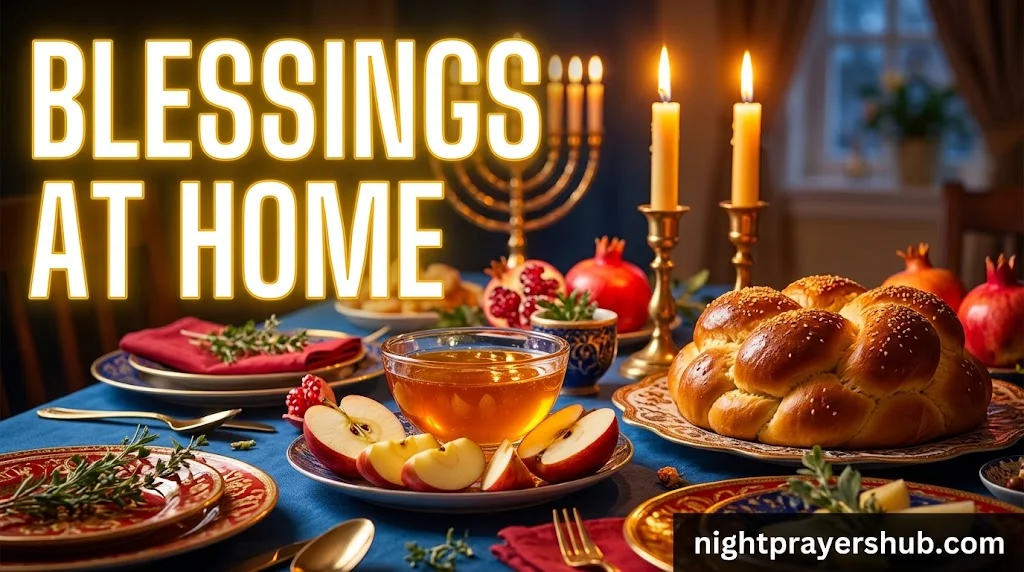
Apple and honey
“Borei p’ri ha-eitz,” then the yehi ratzon
The candle blessing ends with the words “lehadlik ner shel yom hazikaron,” meaning “to kindle the light of the Day of Remembrance.” On Shabbat, the wording adds a line for Shabbat.
Shehecheyanu thanks God for keeping us alive and bringing us to this season:
“May it be Your will to renew for us a good and sweet year.”
Other simanim, or symbolic foods, carry their own wishes. A pomegranate stands for many good deeds. A fish head means leading, not trailing. Tzimmes, a sweet carrot dish, hints at multiplying blessings.
On the second night, a new fruit joins the table. It is a seasonal fruit you have not yet tasted this year. Keep it in mind during Shehecheyanu.
Many families avoid sour foods and nuts. Sweet foods express the wish for a sweet year. One traditional reason for skipping nuts is that they can add saliva and make clear prayer harder.
Hosting guests of other faiths? Invite them to taste the apples and say “Shanah tovah.” Offer grape juice and nut-free, allergy-friendly options. If you celebrate alone, the same blessings work for one person.
FAQs
These quick answers are meant for fast reading and voice search.
What do you say during Rosh Hashanah?
The classic greeting is “L’shanah tovah tikateivu,” meaning “May you be inscribed for a good year.” You can also say “Shanah tovah.” At the meal, you say the Shehecheyanu and the yehi ratzon over apples and honey.
What blessings are given on the first night of Rosh Hashanah?
On the first night, you light candles and say Shehecheyanu. Then come Kiddush, hand washing, and Hamotzi over challah dipped in honey. Last comes the apple and honey blessing, followed by the yehi ratzon and the other symbolic foods.
What blessings are recited on the second night of Rosh Hashanah?
The second night repeats the candle blessing, Kiddush, and Shehecheyanu. A new fruit is added to the table, and Shehecheyanu is said with it in mind. Many families also repeat the apple and honey blessing and the yehi ratzon.
What is the Hebrew prayer for Rosh Hashanah?
No single prayer covers the whole holiday. The best-known Hebrew blessings are Shehecheyanu and the yehi ratzon (“shanah tovah um’tukah”), both shown above. In synagogue, the core prayers are the Amidah and Musaf.
Conclusion
Rosh Hashanah prayers blend awe with hope. In synagogue, the liturgy follows Maariv, Shacharit, and Musaf. At home, a short set of blessings turns dinner into worship.
Abroy Hassan is the founder and writer behind Morning Prayer Hub, where he shares daily prayers and devotionals to help readers begin each day with faith, gratitude, and a quiet mind. He writes with a simple goal: to make prayer feel accessible, personal, and part of everyday life.